This video reminds me of Mr. Dressup, the long-running (29 years!) CBC children's program, and a segment during the show when Mr. Dressup (aka Ernie Coombs) would turn a blank canvas into an amazing drawing in minutes right before your eyes. I remember being so entertained and amazed at how a few simple lines and shapes could be combined to bring an image to fruition. I think that same concept of simplicity makes the stem cell video an engaging and concise way for scientists to share and explain their research to pretty much anyone.
Thursday, April 18, 2013

Thursday, April 11, 2013
Biology & Engineering go together like Peanut Butter & Jelly
Trojans by Atlas Genius
"Tissue engineering - defined as the application of principles and methods of engineering and life sciences for the understanding of the structure and function of healthy tissues and pathologies, and the development of new biological substitutes for the repair or regeneration of tissues and organs - is an emerging multidisciplinary field of science, combining principles of biology and engineering to develop viable substitutes that restore and maintain the function of human tissues."
Fernando Lucas Primo & Antonio Claudio Tedesco - Nanomedicine April 2013, Vol.8, No.4, p.513-515
- In vitro (in the lab) growth and development of 3-dimensional tissues and implants from cell cultures to repair damaged body parts, study physiological processes (like how a heart beats) or diseases (like cancer) in a controlled environment, and even to investigate the action of drugs and other therapies before clinical use.
- Injectable or implantable therapies involving molecules and/or biocompatible systems (e.g. stem cells) which induce and aid the body's ability to repair and regenerate tissues and organs.
- Development of prosthetics and other devices out of biocompatible materials to replace/treat injuries or damaged/aging organs.
Aubrey de Grey, a British researcher on aging, has compared the human body to a car, in that just as cars require maintenance to continue performing efficiently, so too do people. Tissue engineering offers the opportunity not only to keep that '65 Shelby Mustang in running condition, but to upgrade it on the fly to its more potent 2013 version.


Wednesday, March 20, 2013
Animations: the future of science education?
Maybe it's just my inner-nerd speaking but I really wish professors during my undergraduate training had used animations like the one above in their lectures. Not only is it filled with the same information that can be found in a textbook or on a lecture slide, but it is engaging and entertaining (especially {spoiler alert} when the neutrophil explodes). Unlike subjects such as math or literature, science, and in particular biology, involve movement and ever-changing/evolving entities and processes. So why teach a constantly-in-motion concept with stagnant lecture notes or diagrams when an animation or film clip is available?
I think it's time for education to embrace and implement technological developments. But, don't just take my word for it. Compare the figure below from Terminology: nomenclature of mucosa-associated lymphoid tissue by P Brandtzaeg, H Kiyono, R Pabst and M W Russell to the posted video and see for yourself.

Depiction of the human mucosal immune system. Inductive sites for mucosal immunity are constituted by regional mucosa-associated lymphoid tissue (MALT) with their B-cell follicles and M-cell (M)-containing follicle-associated epithelium through which exogenous antigens are transported actively to reach antigen-presenting cells (APCs), including dendritic cells (DCs), macrophages, B cells, and follicular dendritic cells (FDCs). In addition, quiescent intra- or subepithelial DCs may capture antigens at the effector site (exemplified by nasal mucosa in the middle) and migrate via draining lymphatics to local/regional lymph nodes where they become active APCs, which stimulate T cells for productive or downregulatory (suppressive) immune responses. Naive B and T cells enter MALT (and lymph nodes) via high endothelial venules (HEVs). After being primed to become memory/effector B and T cells, they migrate from MALT and lymph nodes to peripheral blood for subsequent extravasation at mucosal effector sites (exemplified by gut mucosa on the right). This process is directed by the local profile of vascular adhesion molecules and chemokines, the endothelial cells thus exerting a local gatekeeper function for mucosal immunity. The gut lamina propria contains few B lymphocytes but many J-chain-expression IgA (dimers/polymers) and IgM (pentamers) plasmablasts and plasma cells. Also, there are normally some rare IgG plasma cells with a variable J-chain level (J), and many T cells (mainly CD4+). Additional features are the generation of secretory IgA (SIgA) and secretory IgM (SIgM) via polymeric Ig receptor (pIgR) membrane secretory component(mSC)-mediated epithelial transport, as well as paracellular leakage of smaller amounts (broken arrow) of both locally produced and plasma-derived IgG antibodies into the lumen. There may also be some active transport of IgG mediated by the neonatal Fc receptor (not indicated). Notes that IgG cannot interact with J chain to form a binding site for pIgR. The distribution of intraepithelial lymphocytes (mainly T-cell receptor alpha/beta+ CD8+ and some gamma/delta+ T cells) is also depicted. The insert (lower left corner) shows details of an M cell and its "pocket" containing various cell types. The cartoon is modified from Brandtzaeg and Pabst with permission from Elsevier.
Thursday, March 14, 2013
The Price is Right...for curing disease and extending life
Yamaha by Delta Spirit from the Warm Bodies Soundtrack (great movie btw)
What is the best way to promote research aimed at curing intractable diseases and extending human life? For a group of sponsors including Facebook founder and CEO Mark Zuckerberg and Apple chairman Art Levinson, the answer is to incentivize breakthroughs with a $3 million prize. The Breakthrough Prize in Life Sciences is awarded 5 times annually, "for past achievements in the field of life sciences, with the aim of providing the recipients with more freedom and opportunity to pursue even greater future accomplishments."
 |
| http://graphics8.nytimes.com/images/2013/02/26/science/26WEEK3/26WEEK3-popup.jpg |

Here is an excellent blog post by @GrrlScientist on why the prize may not be so great and how it could be modified to more effectively promote research.
http://www.guardian.co.uk/science/grrlscientist/2013/feb/21/breakthrough-prize-life-sciences-misguided-flawed
While I agree with much of what is said about not acknowledging everyone involved in collaborative research efforts, I believe that acknowledging a sole scientific leader sticks in peoples minds more so than a large group and helps bring science mainstream with an identifiable spokesperson.
http://www.guardian.co.uk/science/grrlscientist/2013/feb/21/breakthrough-prize-life-sciences-misguided-flawed
While I agree with much of what is said about not acknowledging everyone involved in collaborative research efforts, I believe that acknowledging a sole scientific leader sticks in peoples minds more so than a large group and helps bring science mainstream with an identifiable spokesperson.
Friday, March 8, 2013
To infinity and beyond...genomics
Freedom by Anthony Hamilton & Elayna Boynton from Django Unchained

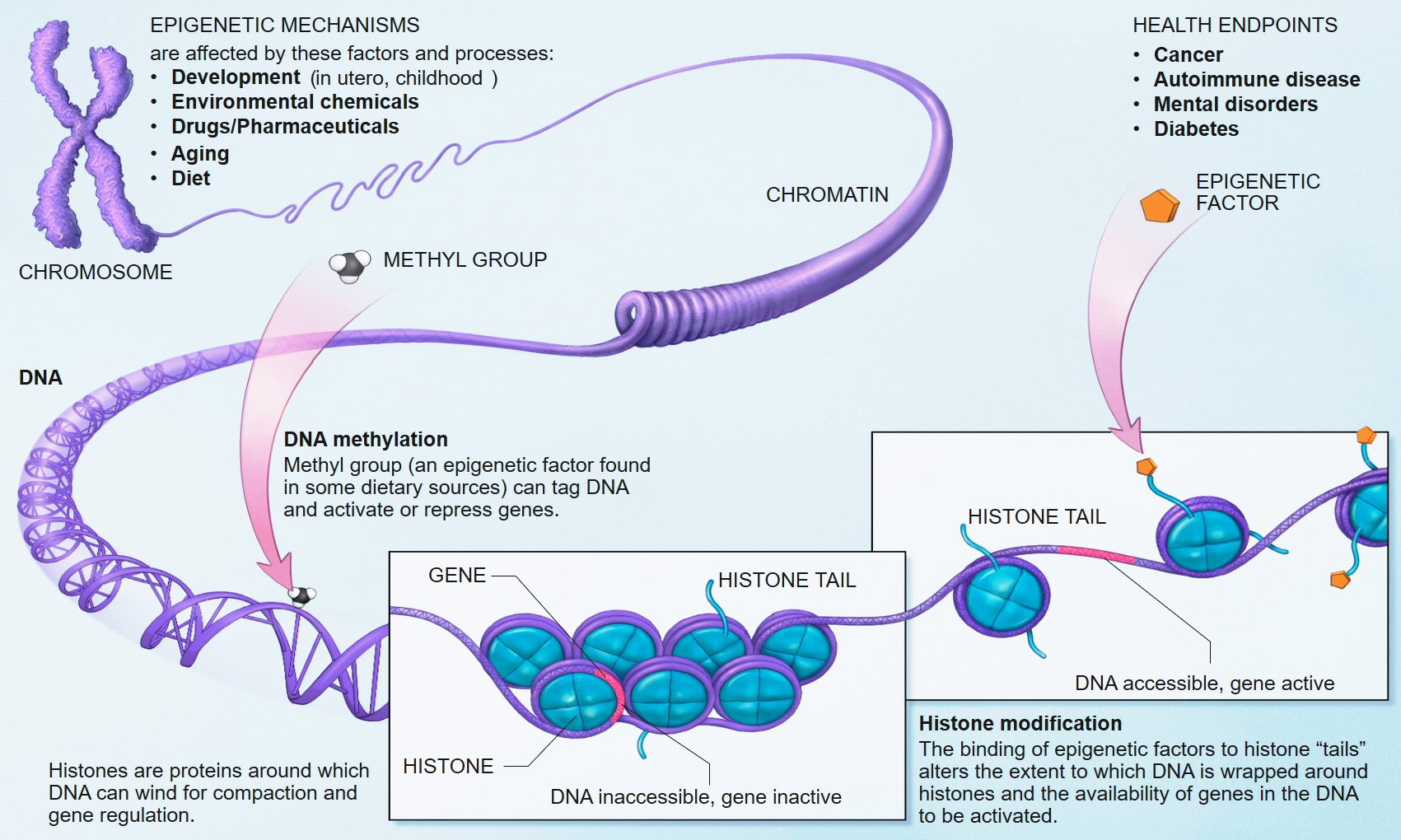
In the words of Dr. Raul Urrutia, an epigeneticist at the Mayo Clinic in Rochester, Minnesota "DNA gives us the potential to be who we are, but Epigenomics transform this potential into the reality of who we are."
The human genome project was an incredible achievement in the history of science and advanced our understanding of the molecular basis of life and evolution. With the promise of revolutionizing medical diagnoses and treatments, the collection of genomic data and subsequent analysis is leading the slowly emerging personalized and individualized medical field, but is really just the tip of the iceberg in terms of fully comprehending the molecular complexities of disease and therapies.
 |
| http://commonfund.nih.gov/epigenomics/figure.aspx |
While exceedingly complex and difficult to research, breakthroughs in epigenetics are sure to improve our understanding of the molecular regulation of cellular processes, and bring us closer to solving health issues ranging from infection and disease to degeneration and aging.
Thursday, January 24, 2013
'The Overview Effect', or why everyone should go to space
Awesome video with a very profound message regarding humanity's responsibility on 'Spaceship Earth'. I couldn't help but be reminded of my inspiration for this blog, Melville's oyster peering at the sun through a layer of water, when I saw the pictures/videos of the thin atmospheric layer required for all life on the planet. It gave me new perspective that not only can we visualize and comprehend the implications of that layer of life, but our capability - and desire - to step outside the habitable zone leads us to better understand - and empathize with - our dynamic and fragile home. Looking at things from another point of view is crucial for understanding, and mankind's access to the depths of the universe makes learning a timeless, infinite endeavor.
Wednesday, January 23, 2013
"Let not the vastness of this universe paralyze us into a constellation"
Speaking of healthcare revolution...these guys can inspire!
The stem cell road trip
 |
| http://warwickcasculture.wordpress.com/2012/11/29/road-trip/ |
Just as roads and highways provide accessible routes for cars, publications and experimental technologies provide foundations for the progression of research hypotheses to meaningful scientific conclusions. For example, the production of induced pluripotent stem cells (iPSCs) from mice by Yamanaka in 2006 led to the development of iPSCs from human cells, paving the way for potential regenerative therapies and patient-specific 'disease-in-a-dish' modeling.
Speed limits serve to warn and protect drivers, while research guidelines and regulations prevent false publications, ensuring sound, ethical research proposals and methodology. “The scientific method takes time and technology is not 100% fool proof” reminds Jen McCormick, Ph.D. bioethicist at the Mayo Clinic. “It’s important to understand the basic biology and how things work” regarding iPSCs and human embryonic stem cells and avoid “pushing direct to clinical use too quickly”. Policy dictates measures of safety and efficacy, which are paramount for successful clinical trials. As we venture further along the stem cell road, protocol must ensure smooth implementation in the medical setting.
Ultimately, drivers determine the destinations and length of their trips as scientists do the direction and time course for their research projects. The more drivers in more vehicles, the more distance covered; the more researchers in diverse fields of science, the greater the potential to advance stem cell research on multiple fronts. “Scientists have an obligation not just educating, but also engaging in discussions” with the public, remarks Dr. McCormick.
Buckle up and enjoy the ride!
Individualizing medicine - a drastic change in the medical landscape
A good example of this is the recently announced collaboration between the Mayo Clinic and Silicon Valley Biosystems (SV Bio). Genetic data is too vast and complex for any one physician, and requires computer-assisted analysis to provide relevant results. This makes third party data interpretation crucial for doctors to use the genome-based testing tool to better understand a patient's disease(s) and ultimately lead to more efficient treatment(s) with increased efficacy and decreased cost. This brings up a whole other slew of issues such as patient-privacy, which is where oversight and policy come in. Hopefully politics can avert common partisanship and instead promote the development of this society-benefiting technology.
Genome-based testing is just one example of the innovations ushering in the era of individualized medicine, an era with the potential to prevent diseases before they occur and to tailor therapies optimized for each patient's unique circumstance. Stay tuned for more exciting developments.
Friday, January 18, 2013
Stem cells - good news, bad news
King and Lionheart by Of Monsters and Men. Their entire album 'Me Head Is an Animal' is terrific.
Stem cells have the potential to be used for regenerative therapies, to model and study disease and treatments, and to increase our understanding of the molecular regulators of cellular processes. But, stem cells also have a dark side. Pluripotent stem cells have the ability to form any cell and tissue type in the body, including tumors. In fact, so called "cancer stem cells" may be the progenitors to malignant disease and are highly resistant to chemotherapeutic agents, resulting in metastasis or relapse in patients.
There is a weekly research lecture series at the Mayo Clinic in Arizona called "The Science of Medicine" in which either a Mayo or guest researcher presents their data and findings. The last presentation was by Dr. Max Wicha from the University of Michigan, talking about his findings related to breast cancer stem cells and the need to target those cells to truly 'cure' cancer. He made a very interesting point about current cancer therapy, one in which I think everyone should be aware of. The effectiveness of current cancer therapy (at least for solid tumors such as breast cancer) is measured by the shrinkage of the tumor mass, and doesn't take into consideration destruction of the cancer stem cells. It may even be the case that the cell death caused by chemotherapy actually propagates the survival and expansion of the cancer stem cells. It is a fascinating and fairly recent advance in cancer biology, and one in which research will surely benefit the treatment of all types of cancer in the near future.
All of us know someone who has been touched by cancer and I think this is an important point to be shared and brought up to your oncologist if the dreaded C-word enters your life. Have them get in touch with Dr. Wicha or another cancer stem cell pioneer, it could be the difference between life and death.
Dr. Max Wicha explaining the concept of cancer stem cells and implications for successful therapies
Wednesday, January 9, 2013
Your personalized 'disease-in-a-dish'
Metric - Artificial Nocturne
The body is full of human cells which contains the genetic code (DNA) of that particular individual. Not every gene is expressed (RNA) and/or translated (protein) in every cell, which is the ultimate determinant of the functioning (phenotype) of a particular cell. Bioengineering techniques are nearing a point where scientists can efficiently, and safely, reprogram differentiated cells back into an undifferentiated state called induced pluripotent stem cells (iPSCs).
Using knowledge gained from studying the transcriptomes (RNA) and proteomes (protein) of specific cells, as well as research on the particular signalling factors and microenvironment conditions necessary for proper functioning of tissue-specific cells, it is possible to use iPSCs to re-establish patient-specific diseases in a dish to study the efficacy of different treatments. As Nina Tandon mentions in her excellent TED talk, this 'disease-in-a-dish' technology has the potential to improve patient outcomes and cheapen care costs, and also provides a valuable resource for modeling and studying diseases which may (and likely do) have different pathologies in different people.
Friday, January 4, 2013
0.000000000000001 seconds is really fast
A little (or a lot) of tap dancing percussion from Tilly and the Wall in Bad Education.
What do drugs and renewable energy have in common?
Answer: a growing field of science called femtochemistry. As Philip Hunter details in his article 'Caught in the act' (EMBO reports (2013) 14, 36 - 38), understanding the details of chemical reactions - like those catalyzed by enzymes (potential drug targets) and photosynthetic proteins (solar energy) - requires measuring changes in nanometers (one billionth of a meter, which is ~3 feet for you Americans) on a timescale of one quadrillionth (one thousand billionth) of a second by highly caffeinated scientists using lasers and x-rays.
Ramesh Raskar: Femtophotography - Imaging at a trillion frames per second
That is incomprehensibly fast (hence the caffeine) but is the level of detail necessary to determine the molecular changes that occur as a protein, or protein complex, efficiently modifies it's substrate. Enzymes allow reactions that would take hours or even years to proceed on their own, to happen in seconds or minutes, controlling most processes of living cells. Diseases can be caused by dysfunctions in human enzymes, or by bacteria/parasites with their own unique enzymes required for survival and infectiousness, making femtochemistry paramount for designing and optimizing drug candidates to target said enzymes.

This is just the tip of the femto-iceberg, and it may seem like a snail's pace for industry to apply the science being discovered, but just remember that change is happening a billion times faster than the blink of an eye.
Thursday, January 3, 2013
The Cure Lies Within
So, I've decided that in addition to bringing some pretty cool science and technology developments to your attention I'm also going to share another one of my passions, good music. Hopefully you can enjoy the melodies and lyrics as you learn something new at the same time.
I am a big believer that regenerative medicine will play a significant role in the future of healthcare. While surgery and pharmaceuticals are frequently prescribed for many of today's ailments, ongoing research has shown the propensity for the body to heal itself given the right chemical signals and environmental cues. Current therapies include injecting cells optimized to fight cancer or rejuvenate damaged tissue, or prescribing drugs to reduce inflammation and relieve pain, but what if the body's ability to do these things could be tapped into instead?
 |
| Endogenous opiod systems Neurology August 21, 2012 vol. 79 no. 8 807-814 |
My hope is that one day we will be able to utilize this same concept of 'endogenous medicine' to manipulate and control the stem cells already present in our bodies to reverse tissue and organ degeneration caused by disease and aging.
Thanks kurzweilai.net for bringing this story to my attention.
Subscribe to:
Comments (Atom)